The AEO Checklist: 9 Fixes That Determine Whether AI Buyers Find You or Your Competitor
When a B2B buyer asks ChatGPT "which tool is best for [problem your product solves]," one of three things happens. Your product gets recommended. A competitor gets recommended. Or the AI says it doesn't have enough information.
For most B2B SaaS companies right now, the answer is one of the last two.
This isn't a ranking problem. It's an AEO problem. Answer Engine Optimization is the practice of structuring your content so AI models can find it, understand it, and reference it when buyers ask questions. It's different from SEO, it works on different signals, and most teams have not started on it yet.
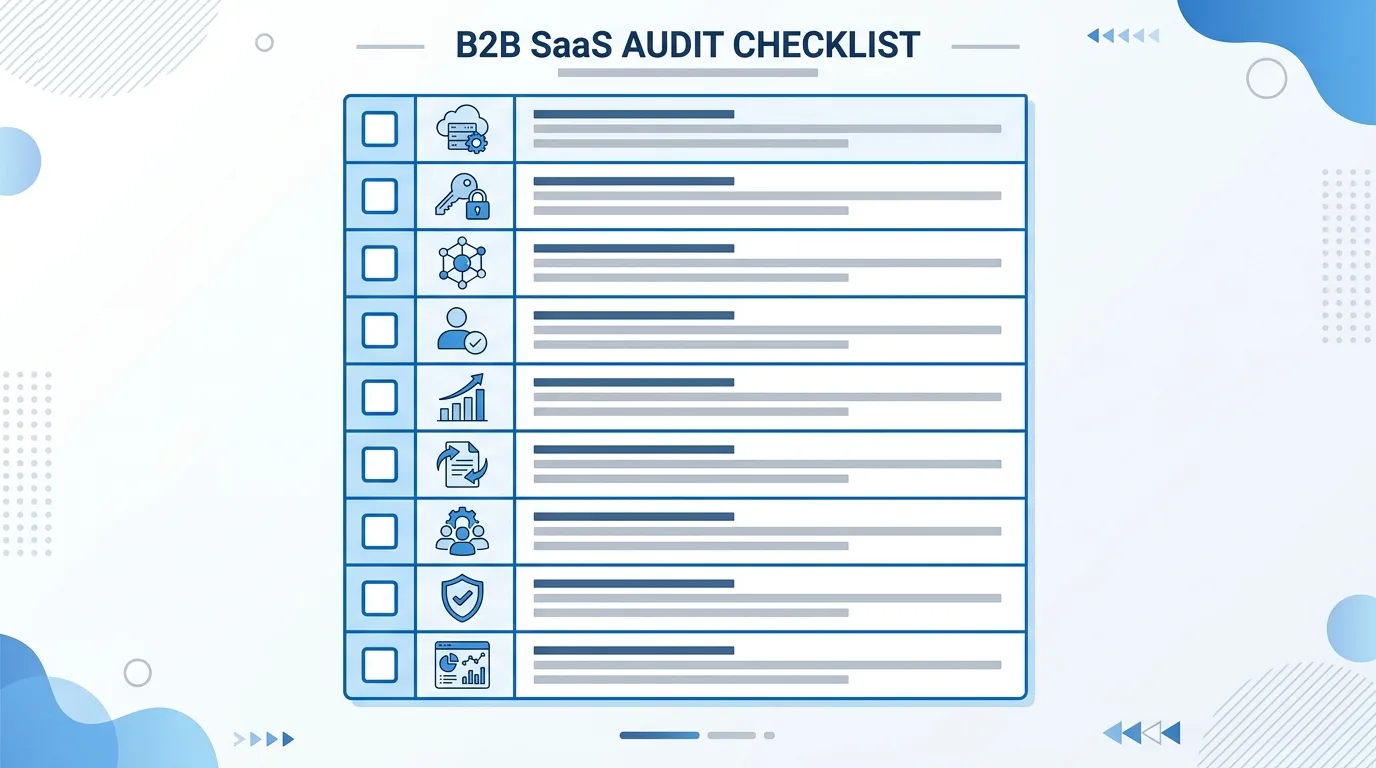
This checklist covers the 9 fixes that matter most. Work through them in order. Each one either directly increases your chances of being cited by AI, or removes a specific reason you're being skipped.
What AEO Is (and What It Isn't)
Before the checklist: a clarification that matters.
AEO is not about gaming AI models. You cannot trick ChatGPT into recommending you. What you can do is give the information systems that feed AI models, including Google, Reddit, and third-party review sites, enough clear, credible, structured information about your product that when a relevant question comes up, your brand appears in the pool of sources the model draws from.
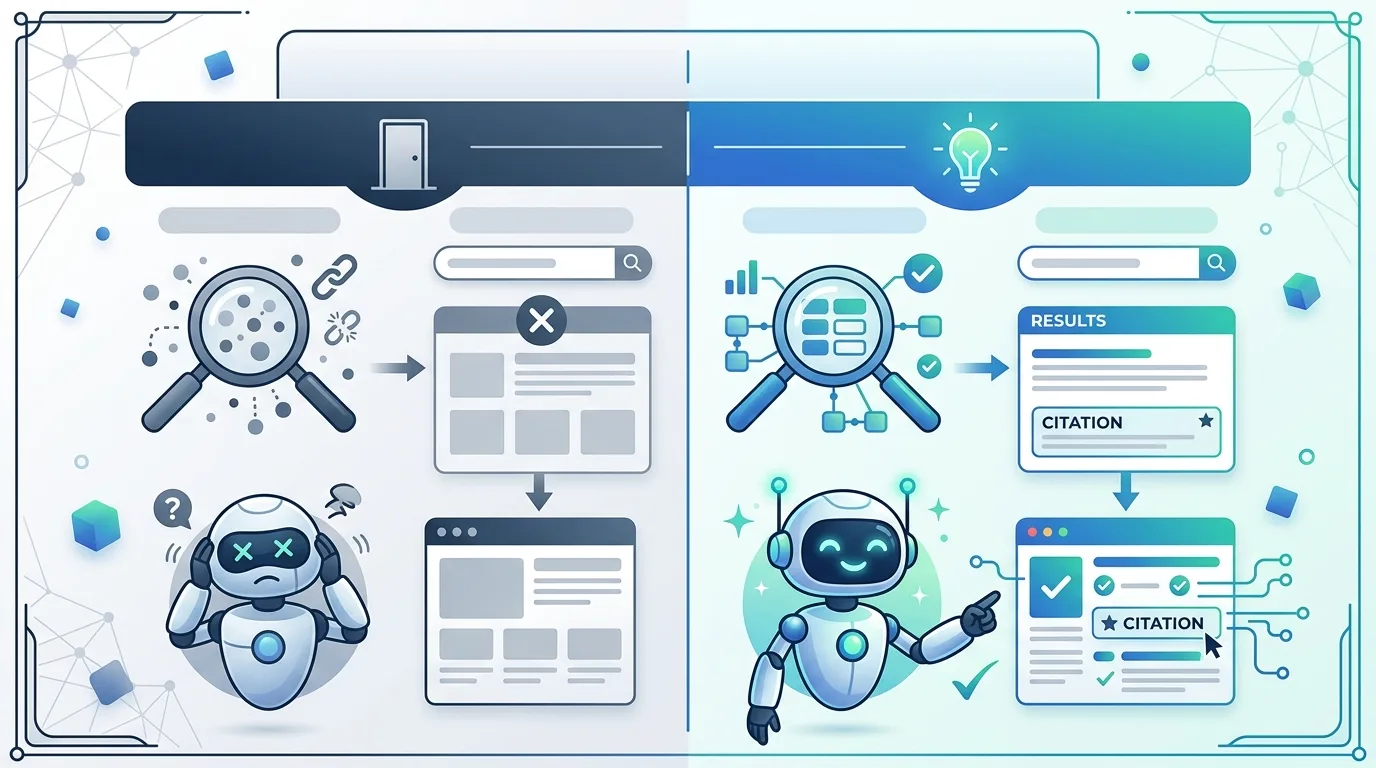
The distinction between SEO and AEO comes down to intent. SEO optimizes for click-through. AEO optimizes for citation. A #1 Google ranking gets you a click. An AEO citation gets you a recommendation. For B2B buyers who are already using AI as their first research step, the citation is worth more.
Now, the checklist.
Fix 1: Write Answers, Not Articles
Most B2B SaaS blog content is written to be read linearly. Intro, problem, solution, conclusion. AI models don't read linearly. They scan for passages that directly answer specific questions, then surface those passages as responses to user queries.
The fix: restructure your content around questions. Every H2 header should be a question your ICP would actually type into an AI. Every section should open with a direct, one-sentence answer before the explanation follows.
Example of what does not work: "Why Content Marketing Matters for B2B SaaS in 2026"
Example of what works: "Does content marketing still drive B2B SaaS leads in 2026?"
The second version is how buyers phrase questions. AI models recognize and surface question-matched content at much higher rates than topic-titled sections.
Fix 2: Add FAQ Sections With Real Questions
FAQ sections are not filler. For AEO purposes, they are one of the highest-value content structures you can publish.
When AI models process content, FAQ blocks are effectively pre-packaged answer pairs: question, response. Models are trained to recognize and retrieve these. A well-written FAQ section at the bottom of a page gives you multiple shots at being cited across multiple query types, not just the primary keyword the page targets.
The questions in your FAQ should come from actual buyer language. Check your sales call notes. Pull the questions from your support inbox. Search "[your category] Reddit" and look at what people actually ask. Then write direct, honest answers. Two to three sentences each. No preamble.
Minimum: 4 FAQ items per blog post, 6-8 per service or product page.
Fix 3: Build an Entity Profile Your Competitors Don't Have
AI models maintain knowledge about brands through what's called an "entity" in semantic search. An entity is a recognized thing: a company, a product, a person. Entities with clear, consistent, cross-referenced information are cited more than entities that are ambiguous or sparse.
Building your entity means making sure the same factual claims about your product appear consistently across multiple independent sources. Your website, your LinkedIn page, your Google Business Profile, Crunchbase, G2, Product Hunt, and any press coverage all contribute. When AI models see the same facts repeated across independent sources, they treat those facts as reliable and use them in responses.
The practical audit: Google your company name. What comes up in the knowledge panel on the right side? If there's no knowledge panel, your entity is weak. If the panel exists but has wrong or incomplete information, you have conflicting entity data that is reducing your citation rate.
Fix 4: Get Cited on Reddit (Specifically)
Reddit is the most cited domain by large language models. The figure that shows up consistently across AI training and citation analysis: roughly 4 out of every 10 AI-generated responses reference Reddit content.
Why? Reddit threads contain the kind of first-person, experience-based language that AI models treat as high-trust signal. When someone asks ChatGPT "what's the best [product category]" and the model returns a recommendation, there is a very high probability that recommendation is informed by a Reddit thread where someone asked the exact same question.
This means your brand needs to appear in relevant Reddit threads, in a helpful, non-promotional way. When someone asks "what tool do you use for [problem your product solves]" in a relevant subreddit, your brand needs to show up in the existing answers. If it doesn't, you have an absence in the single most-cited source AI models use.
The fix is not to post spam. The fix is to build a genuine presence in 3-5 subreddits where your ICP hangs out, contribute real answers, and let your product name become part of the organic conversation.
Fix 5: Structure Your Pages With Schema Markup
Schema markup is machine-readable code that tells search engines and AI systems exactly what type of content appears on each page. Without it, AI models have to infer structure from your HTML. With it, they get direct declarations.
For B2B SaaS, the schemas that matter most for AEO are:
- Article or BlogPosting for content pages
- FAQPage for any page with FAQ content (this is the most impactful for AEO)
- Product or SoftwareApplication for your product and pricing pages
- Organization for your homepage and about page
Adding FAQPage schema to a page that already has FAQ content is the fastest schema win available. It takes 30 minutes to implement and directly improves AI model recognition of your answer pairs.
Fix 6: Write One Authoritative Pillar Page Per Topic You Want to Own
AI models cite sources that demonstrate comprehensive authority on a topic. If you have 10 short posts about AI citation strategy, each covering a slice of the topic, you are less likely to be cited than a competitor who has one authoritative 3,000-word guide that covers the topic end to end.
Pillar pages work for AEO for the same reason they work for SEO: they signal to information-retrieval systems that this source has complete coverage of a topic. AI models, like search crawlers, prefer sources that don't leave users needing to go elsewhere.
Choose the 2-3 topics you want to own for your product category. Build one authoritative pillar page for each. Then link your shorter posts to those pillars. The pillar becomes the citation target; the shorter posts feed authority into it.
Fix 7: Publish Content That Competes on Recency
AI models are not static. GPT-4o, Claude 3.5, and Perplexity all have mechanisms for pulling in recent content, especially for queries where buyers are asking about current best practices or comparing current options.
If your most recent blog post was published eight months ago, you are ceding the "current recommendation" position to competitors who are publishing now. Recency alone is not enough, but publishing fresh, substantive content at least twice a week is a meaningful signal that your source is actively maintained.
This is the mechanical reason why content cadence matters for AEO, not just for SEO. A site that publishes twice a week will appear in more AI model citation pools than a site that published 15 posts in one month and then went dark.
Fix 8: Earn Third-Party Citations on Review and Directory Sites
AI models that give product recommendations are heavily influenced by what appears on G2, Capterra, TrustRadius, and similar review sites. These are high-authority, high-trust domains that AI models treat as reliable sources for product comparisons.
The audit is simple: search your product name on G2 and Capterra. What does your profile look like? How many reviews do you have compared to your top competitors? If your profile is sparse or missing entirely, that is a gap your competitors will fill.
Collecting 10-20 authentic reviews from real users on G2 is one of the highest-leverage AEO moves available to an early-stage SaaS. The investment is a few hours of outreach. The payoff is appearing in AI model citation pools for any comparative query in your category.
Fix 9: Write for Perplexity, Not Just Google
Perplexity is the fastest-growing AI search platform in B2B, with adoption driven heavily by professionals using it as a research tool. Unlike ChatGPT, which draws primarily from training data, Perplexity actively searches the web in real time and cites sources directly.
This matters because Perplexity citations are different from ChatGPT citations. To appear in Perplexity results, your content needs to surface in a live web search on the query the user typed. That means you are optimizing for real-time discoverability, not just training data presence.
The fix: make sure your pages are crawlable, indexed, and structured with clear headings that match the exact language buyers use when searching. Check your robots.txt and sitemap for any indexing blocks. Confirm your pages appear in Google Search Console with no crawl errors. Perplexity surfaces what Google can find, so Google indexability is the floor, not the ceiling.
Where Most Teams Get Stuck
The most common AEO failure mode is not ignorance of these fixes. It's not knowing which ones to prioritize first or having no visibility into what's actually happening with their brand in AI search right now.
Before you can prioritize any of these fixes, you need a baseline. Which AI platforms mention your brand? What are they saying? Which competitor is being recommended in queries where you should appear? Where specifically are the gaps in your entity coverage?
That's what a structured AI visibility audit gives you. It maps your current citation status across ChatGPT, Claude, Perplexity, Google AI Overviews, and Reddit, then surfaces the specific gaps with the highest priority fix for each.
CiteEngine offers a free AI Visibility Audit that does exactly that: a full breakdown of where your brand shows up (and doesn't) across AI platforms, delivered async within 48-72 hours. No call required.
If you are working through this checklist without knowing your baseline, start there.
Get the free AI Visibility Audit at www.citeengine.com
The Order of Operations
If you are starting from zero, here is the sequencing that creates momentum fastest:
- Week 1: Run an AI Visibility Audit to establish your baseline. Fix any crawl or indexing issues (Fix 9). Add FAQPage schema to your top 5 pages (Fix 5).
- Week 2: Restructure your 3 most-trafficked blog posts around question-based headers and direct answers (Fix 1). Add FAQ sections to those same posts (Fix 2).
- Week 3: Audit and clean up your entity profile across Google, Crunchbase, LinkedIn, and G2 (Fix 3). Reach out to real users for G2 reviews (Fix 8).
- Month 2: Build your first pillar page for your primary topic cluster (Fix 6). Start building a Reddit presence in 2-3 subreddits where your ICP is active (Fix 4).
- Ongoing: Publish substantive content at least twice per week (Fix 7). Repeat the visibility audit every 60 days to track citation movement.
AEO is not a one-day project. It's a systematic build. The teams that start now will have compounding citation authority by the time most of their competitors realize what is happening.
A Note on What AEO Can and Cannot Promise
No one can guarantee that a specific AI model will cite your brand. The models are probabilistic systems trained on massive datasets. What AEO does is increase the probability that your brand appears in the citation pool the model draws from, and that your content matches the query in a way the model recognizes.
The companies that will dominate AI search over the next 24 months are the ones building this infrastructure now, before their category is locked in by whoever got there first.
The checklist above is where to start.
About CiteEngine
CiteEngine helps B2B SaaS companies build AI citation authority through done-for-you content strategy, entity optimization, and Reddit presence. Start with the free AI Visibility Audit: www.citeengine.com
FAQ
What is the difference between AEO and SEO? SEO optimizes your content to rank in traditional search engine results pages, where the goal is a click-through. AEO optimizes your content to be cited by AI systems like ChatGPT, Claude, and Perplexity, where the goal is a recommendation. Both matter in 2026, but AEO operates on different signals: structured answers, FAQ markup, entity clarity, and third-party citations rather than backlinks alone.
How long does it take to see results from AEO? Most teams that implement AEO systematically start to see citation movement within 6-10 weeks. Quick wins like adding FAQ schema or fixing crawl errors can show impact faster. Building Reddit presence and earning G2 reviews compounds over months. The honest answer: AEO is a 3-6 month investment before you see consistent citation rates in competitive queries.
Which AI platforms should I prioritize for AEO? Perplexity first, because it uses live web search and you can measure your appearance directly. Then Google AI Overviews, because it has the largest audience of any AI search surface. Then ChatGPT, which requires training data presence and third-party citations. Claude follows similar patterns to ChatGPT.
Do I need a dedicated tool for AEO, or can I do it manually? You can audit your AI citation status manually by running structured queries in each AI platform and tracking what gets cited. This works at small scale. At larger scale, systematic tracking across platforms, competitors, and query types requires dedicated tooling or a managed service. CiteEngine's free AI Visibility Audit is a good starting point to understand where you stand before deciding whether to manage it in-house.
Is AEO only relevant for content marketing teams? No. AEO touches technical SEO (schema, crawlability), product marketing (entity definition, messaging clarity), community management (Reddit, forums), and reputation management (review sites). It's a cross-functional effort, which is why most teams benefit from having a defined owner rather than treating it as a side project.
What is the single highest-ROI AEO fix for most B2B SaaS companies? Adding FAQPage schema to existing pages that already have FAQ content. This requires no new content creation, takes a developer 1-2 hours to implement, and directly improves AI model recognition of your answer pairs. If you do nothing else from this checklist today, do this.
Frequently Asked Questions
These are the questions buyers ask ChatGPT, Claude, and Perplexity when researching this topic.
Q: What is an AEO checklist for B2B SaaS?
A: A checklist covering the key factors AI models evaluate when deciding whether to cite a brand: content structure, FAQ schema, third-party authority signals, review platform presence, Reddit mentions, query-matched titles, and citation-ready formatting.
Q: Which AEO fix has the biggest impact on AI citation rates?
A: For most B2B SaaS brands, fixing third-party authority gaps (G2 profile and Reddit presence) has the largest immediate impact. AI models heavily weight mentions from sources they already trust more than your own website content.
Q: How do I know if my content is AEO-optimized?
A: AEO-optimized content directly answers specific questions your buyers ask AI tools, includes FAQ schema markup, cites data and sources, uses clear headers, and is structured so AI models can extract clean answers.
Q: How often should I run an AEO audit?
A: Run a full AEO audit quarterly and a lighter citation check monthly. The most important ongoing action is tracking whether your brand appears in AI responses to your key buyer queries.
Q: Does page speed matter for AEO?
A: Indirectly yes. Slow sites get fewer backlinks and social shares, reducing third-party authority signals. Core Web Vitals also affect Google AI Overview inclusion. Target under 3 seconds load time as a baseline.
Want AI to recommend your brand?
Get a free AI visibility audit: where you show up in ChatGPT, Claude and Perplexity today, and where your competitors do. No calls required.