Why AI Is Replacing Google as Your Homepage - And What That Means for Your Brand
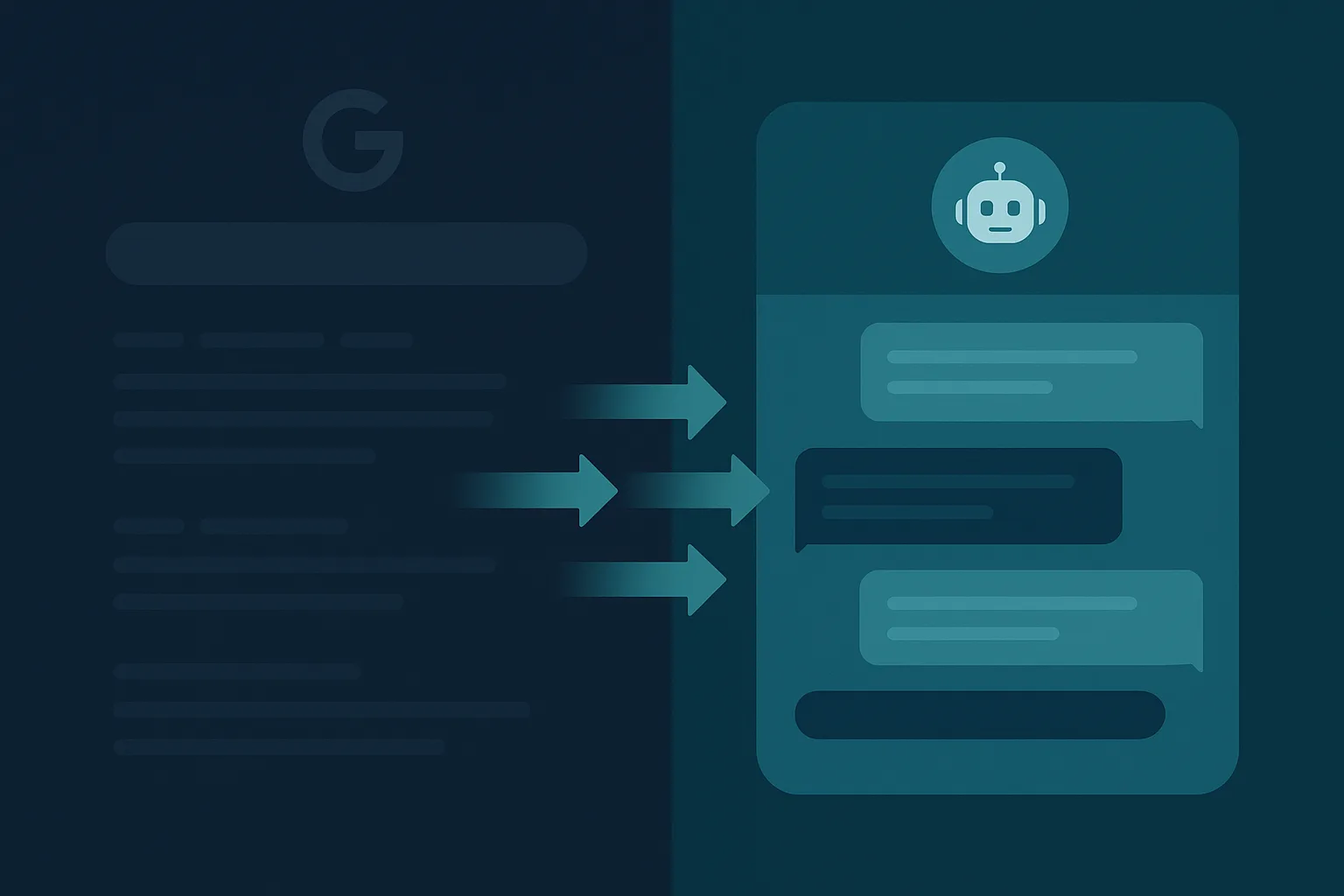
Your website isn't your homepage anymore. AI is.
While you've been optimizing for Google rankings, a seismic shift happened. ChatGPT, Perplexity, and Claude now answer 40% of search queries that used to drive traffic to your site. When someone asks "What's the best project management tool?" or "How do I reduce churn?", AI doesn't send them to browse 10 blue links. It gives them the answer directly.
Here's the problem: If you're not in the sources AI learns from, you're invisible in those answers.
The Death of Click-Through Traffic
Traditional SEO focused on getting people to your site. AI search eliminates that step entirely. A user asks a question, gets a complete answer, and never clicks through. Your beautifully crafted landing pages sit empty while AI delivers your competitor's solution as the authoritative response.
This isn't coming. It's here. Microsoft's Copilot integration means AI answers appear directly in search results. Google's AI Overviews do the same. The browsing behavior that drove the last 20 years of digital marketing is ending.
Why B2B Brands Face the Highest Stakes
B2B buying cycles make this shift especially dangerous. Your prospects don't impulse-buy software. They research, compare, and validate over weeks or months. During that process, they ask AI hundreds of questions:
- "What are the top CRM solutions for mid-market companies?"
- "How much should we budget for marketing automation?"
- "What integration challenges should we expect with Salesforce?"
If AI consistently cites your competitors but never mentions you, you've lost the sale before it started. B2B buyers trust AI recommendations because they feel like neutral, research-backed advice rather than marketing pitches.
The brands winning these AI citations share three traits: consistent authority content, strong community signals, and systematic citation building.
What Winning Brands Do Differently
They Build Real Authority, Not Just Content
Winning brands don't just publish blog posts. They become the go-to source that other sites reference. When TechCrunch mentions project management trends, they quote Asana. When Forbes discusses remote work tools, they cite Zoom. This creates the citation network that trains AI models to recommend these brands.
They Dominate Reddit and Community Spaces
AI models heavily weight Reddit discussions because they represent unfiltered user opinions. Brands that consistently provide helpful answers in r/entrepreneur, r/marketing, and industry-specific subreddits build the community signals that AI interprets as trustworthiness.
Look at any AI response about marketing tools. The recommendations almost always align with brands that have strong Reddit presence and positive community sentiment.
They Think in Citations, Not Keywords
Traditional SEO optimized for Google's algorithm. AI citation building optimizes for how AI models determine authority. This means focusing on:
- Getting mentioned alongside established industry leaders
- Building citations in high-authority publications
- Creating content that other sites naturally reference
- Establishing consistent brand mentions across trusted sources
The Reddit Factor
Reddit has become the unofficial training ground for AI models. When Claude or ChatGPT recommends a software solution, it's often because that solution gets consistently mentioned and upvoted in relevant Reddit discussions.
This isn't about gaming Reddit. It's about genuinely participating in communities where your prospects seek advice. The brands that provide real value in these spaces build the trust signals that AI models recognize as authority.
The Citation Multiplication Effect
Every citation builds on previous ones. When you get mentioned in one authoritative source, it increases the likelihood of being cited in others. AI models learn these patterns and begin recommending your brand more frequently.
This creates a compound effect. Early citation building might feel slow, but it accelerates rapidly once you cross the authority threshold that AI models recognize.
What Happens If You Wait
The brands establishing AI authority now will be nearly impossible to displace later. AI models heavily weight established citation patterns. If your competitor becomes the "go-to" recommendation for your category, changing that perception requires massive effort.
Meanwhile, your traditional marketing channels become less effective as more users shift to AI-first research behavior. The traffic that once flowed to your website gets redirected to AI interfaces that may never mention your brand.
Your Next Move
Building AI authority requires systematic citation development across multiple channels. You need consistent mentions in authority publications, strong community signals from Reddit and industry forums, and content that naturally earns references from other sites.
This isn't traditional content marketing or SEO. It's citation engineering.
If you're ready to ensure your brand appears in the AI recommendations that drive your industry's buying decisions, the window is still open. But it's closing fast as more brands recognize this shift and begin building their citation networks.
The question isn't whether AI will replace traditional search as your primary customer acquisition channel. It's whether you'll be visible when that transition completes.
Ready to build your AI citation network? CiteEngine creates the systematic citation and authority signals that get your brand recommended by AI. Book a 15-minute fit check call to see how we can position your brand as the authority AI recommends.
Frequently Asked Questions
These are the questions buyers ask ChatGPT, Claude, and Perplexity when researching this topic.
Q: Is AI really replacing Google for brand discovery?
A: Increasingly yes. ChatGPT, Perplexity, and Claude now handle a significant portion of informational and comparison queries that previously drove traffic to websites via Google. Gartner projects 25% of organic search traffic will shift to AI assistants by end of 2026. Brands not appearing in AI-generated answers are losing discovery opportunities they cannot measure in traditional analytics.
Q: What does it mean for my brand if AI is replacing Google?
A: It means your brand visibility now depends on whether AI models cite you as a trusted source, not just whether your website ranks in blue-link results. Brands optimized for traditional SEO but invisible to AI risk losing buyers who make decisions based entirely on AI-generated recommendations without ever visiting a website.
Q: How can I make my brand visible in AI-generated answers?
A: Publish structured, answer-ready content that directly addresses buyer questions. Build third-party authority through industry publications and reviews platforms like G2. Implement FAQ schema markup. Create original research and data that AI models can reference. Track your AI citation rate across ChatGPT, Perplexity, and Google AI Overviews.
Q: What tool tracks brand visibility in AI answers?
A: CiteEngine tracks how often your brand appears in AI-generated answers across major platforms including ChatGPT, Perplexity, Claude, and Google AI Overviews. It provides citation rate metrics, brand mention context, and recommendations for improving AI visibility.
Want AI to recommend your brand?
Get a free AI visibility audit: where you show up in ChatGPT, Claude and Perplexity today, and where your competitors do. No calls required.