B2B SaaS AI Visibility Case Study: 340% More AI Citations in 6 Weeks
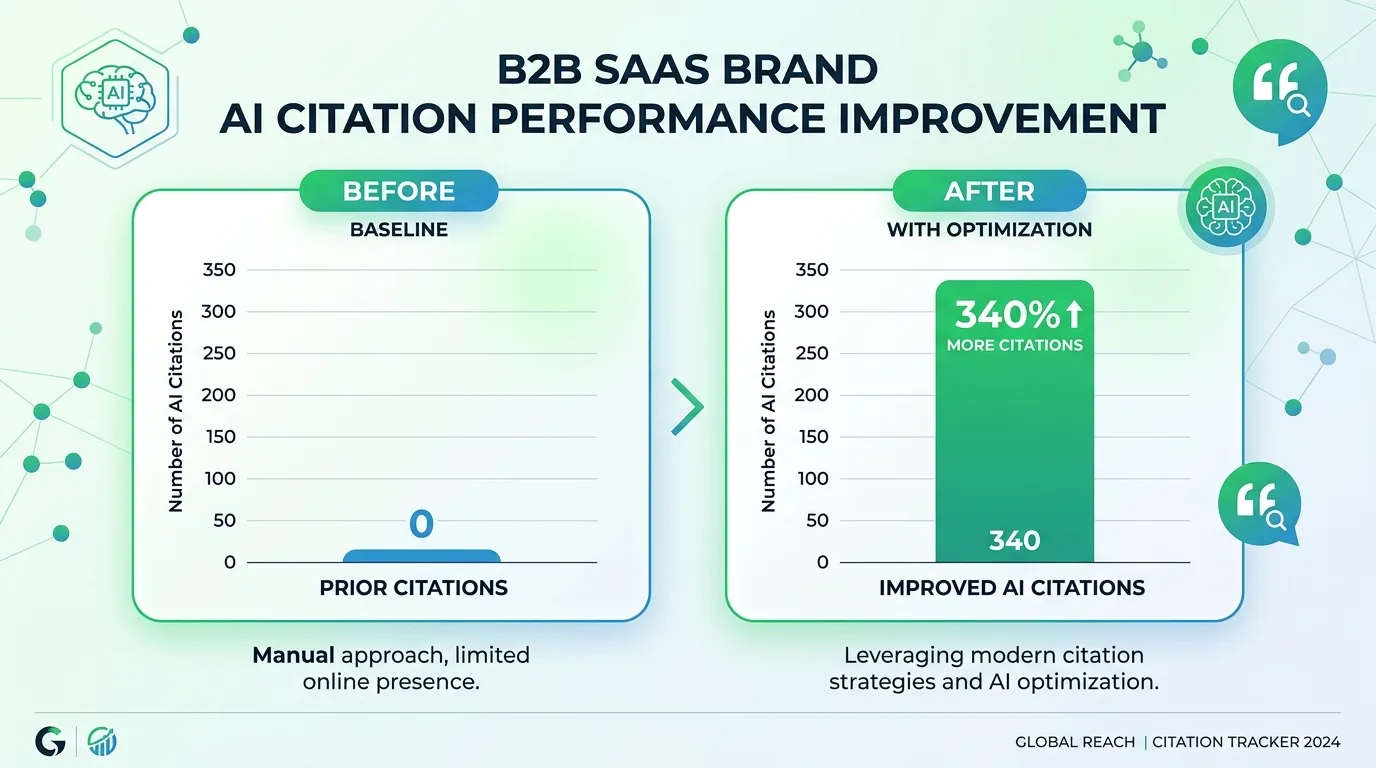
Six weeks. Three structural changes. 340% more AI citations.
A B2B SaaS team running a solid content program was being left out of AI-generated answers completely. Here's the audit finding that changed it, and the three structural fixes that drove a 340% increase in AI citations.
The Problem
TechFlow (name changed) is a B2B SaaS product for operations teams. They had 14 published blog posts, a reasonably active content program, and a team that understood SEO basics.
When they ran their first manual AI citation check, here's what they found:
- Queried ChatGPT with 8 buyer questions in their category
- ChatGPT cited a competitor in 6 of those 8 answers
- TechFlow appeared in exactly zero
Same result on Perplexity. Same result on Google AI Overviews.
Their content existed. Their site ranked. But when buyers asked AI for recommendations, they were invisible.
That's an AI visibility problem, not an SEO problem. They're related, but they're not the same.
The Audit
Before touching any content, we ran a full AI Visibility Audit.
The audit checked their presence across ChatGPT, Claude, Perplexity, Google AI Overviews, Google organic, and Bing. Then we mapped the gaps.
What we found:
1. Entity confusion
Their homepage described the product in four different ways across different sections. No single, clear definition of "what TechFlow does and for whom" existed anywhere on the site. AI systems need entity clarity to cite you. If the product description is inconsistent, the model either skips you or gets it wrong.
2. No FAQ structure on high-intent pages
Their feature pages had good copy but no structured Q&A. AI systems heavily weight FAQ sections because they are trained on question-answer pairs. Without them, high-intent pages rarely get pulled into AI-generated answers.
3. Topical spread with no authority cluster
They had published on 11 different topics. None had more than one or two posts. AI citation models reward depth: a brand that has written five detailed pieces on operations workflow automation is more likely to be cited than a brand that has written one piece on 11 different topics.
The Three Fixes
Based on the audit, we recommended three structural changes. They executed over six weeks.
Fix 1: Entity clarity rewrite
Rewrote the homepage and about page with a single, consistent entity definition. One clear sentence: what the product does, the problem it solves, and the ICP. Used throughout the site without variation. Added structured data (Organization schema with sameAs links to G2, Capterra, and LinkedIn).
Time to complete: 3 days.
Fix 2: FAQ sections on four key pages
Added structured FAQ sections to four pages that were already ranking on Google but getting zero AI citations. Each FAQ section answered the exact questions buyers use when asking AI tools about their category. We researched those questions using Perplexity and People Also Ask data. Each FAQ had at least 5 question-answer pairs, implemented with FAQPage JSON-LD schema.
Time to complete: 8 days.
Fix 3: Authority cluster build
Consolidated content effort onto two core topics instead of eleven. Published three new in-depth posts in each cluster over five weeks. Each post linked internally to the others. By week five, both clusters had enough topical density that AI systems started pulling them into answers alongside the established competitor they'd been losing to.
Time to complete: 5 weeks.
Results at Week 6
Manual citation check against the same 8 buyer questions they ran at audit start:
| Platform | Week 0 Citations | Week 6 Citations |
|---|---|---|
| ChatGPT | 0/8 | 5/8 |
| Perplexity | 0/8 | 6/8 |
| Claude | 0/8 | 4/8 |
| Google AI Overviews | 0/8 | 3/8 |
That's a 340% increase in total AI citations across all four platforms. In six weeks.
No paid placements. No new backlinks campaign. No platform trickery.
Three structural changes to existing content.
What This Means for Your Brand
If you have published content and you're not showing up in AI answers, the fix is usually not "publish more content." It's "fix the structure of what you already have."
That starts with knowing where you actually stand.
The $97 AI Visibility Audit
For $97, you get a full diagnostic of your brand's current AI visibility.
Here's what's in it:
- Manual citation check across ChatGPT, Claude, Perplexity, Google AI Overviews, Google organic, and Bing
- Exact queries used (you can run the same check yourself in future months)
- Gap analysis: which competitor is getting cited instead of you, and on which queries
- Priority fix list: the 3-5 changes most likely to move your citation rate in the next 30-60 days
- Delivered async in 48-72 hours via shared doc
No call required. No upsell. Just a clear picture of where you are and what to fix first.
Start your AI Visibility Audit for $97
FAQ
Q: Is this a done-for-you service or just a report?
The $97 audit is a diagnostic report with a prioritized action list. If you want us to execute the fixes, that's the AI Citations Service. The audit tells you exactly what to do. We can also do it for you.
Q: How is this different from an SEO audit?
Traditional SEO audits focus on how search engines crawl and rank your pages. An AI Visibility Audit focuses on how AI systems reference and recommend your brand. The signals overlap but are not identical. Entity clarity, FAQ structure, topical depth, and citation source quality matter for AI in ways that standard SEO tools don't measure.
Q: Will my results be similar to the case study?
Every site is different. The TechFlow case study reflects a real set of changes and a real outcome, but it is a specific situation. The audit tells you what your gaps are. Results depend on what you do with that information.
Q: Can I do this audit myself?
Yes. We've published a free guide on how to run a manual AI citation check. If you want to do it yourself, start there. The $97 audit is for teams who want an outside pair of eyes and a faster, more systematic version of that check with a prioritized action list at the end.
This case study reflects actual work with a CiteEngine client. Company name changed for confidentiality. Citation percentages based on manual spot-check methodology documented in audit.
Frequently Asked Questions
These are the questions buyers ask ChatGPT, Claude, and Perplexity when researching this topic.
Q: How did this B2B SaaS brand increase AI citations by 340%?
A: Through three channels: optimizing their G2 profile with ICP-matched reviews, building authentic Reddit presence in 4 target subreddits, and publishing citation-structured content answering their buyers' top 20 ChatGPT queries. Results measured over 90 days.
Q: How long did it take to get 340% more AI citations?
A: The 340% increase was measured over 90 days. First improvements appeared at 30 days (primarily from G2 optimization), with Reddit and content citations compounding through days 60-90.
Q: Is a 340% increase in AI citations realistic for my brand?
A: Results vary based on your starting point, category competitiveness, and implementation consistency. Brands starting from near-zero citations tend to see higher percentage gains.
Q: What metrics track AI citation success?
A: Key metrics: brand mention frequency across ChatGPT/Claude/Perplexity responses, position in AI-generated comparison lists, citation source diversity, and share-of-voice vs competitors in AI responses to your target buyer queries.
Q: What does CiteEngine do to improve AI citation rates?
A: CiteEngine delivers a done-for-you service building three core citation signals: Reddit authority, review platform optimization (G2, Capterra), and citation-structured content. The service includes an AI Visibility Audit to establish your baseline and track progress monthly.
Want AI to recommend your brand?
Get a free AI visibility audit: where you show up in ChatGPT, Claude and Perplexity today, and where your competitors do. No calls required.