How to Get Your B2B SaaS Into Google AI Overviews (Before Your Competitors Do)
The Traffic Problem B2B SaaS Companies Aren't Talking About
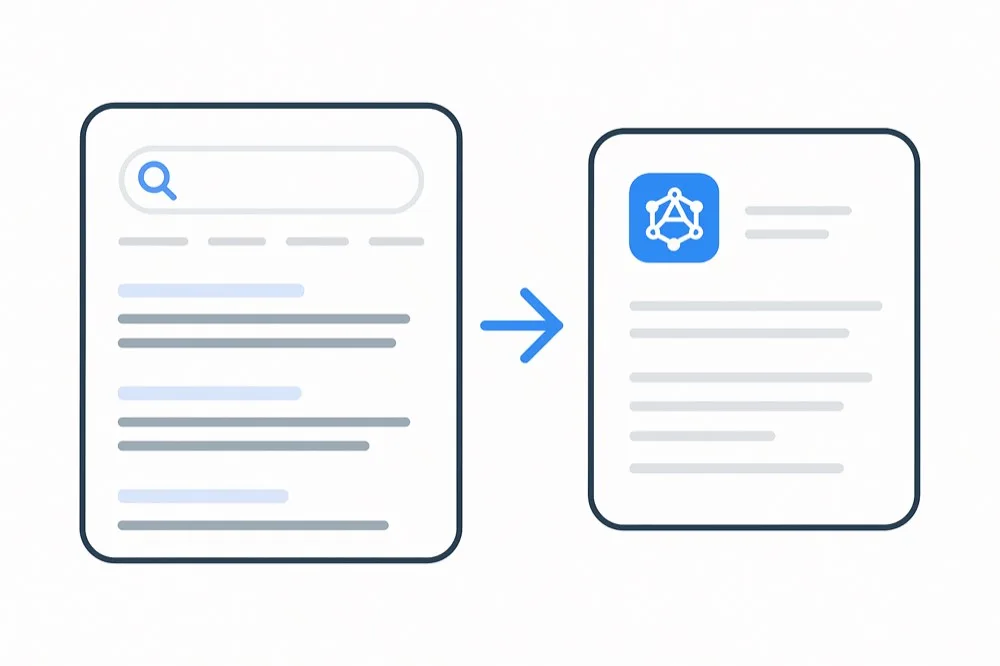
Google AI Overviews now appear on 55% of all Google searches. For informational queries, the number is even higher.
That means more than half of the searches your buyers are running see an AI-generated answer before they see any organic results. Traffic to sites that rank in positions 1-5 has dropped significantly.
DemandSage data shows a 47% reduction in organic clicks for queries where AI Overviews appear. That's not a rounding error. That's a channel in structural decline for companies that aren't adapting.
The companies winning in this environment share one thing in common. They're not just ranked. They're cited.
What "Getting Into" Google AI Overviews Actually Means
There's a common misconception here. You don't submit your site to Google AI Overviews. You don't pay to be included.
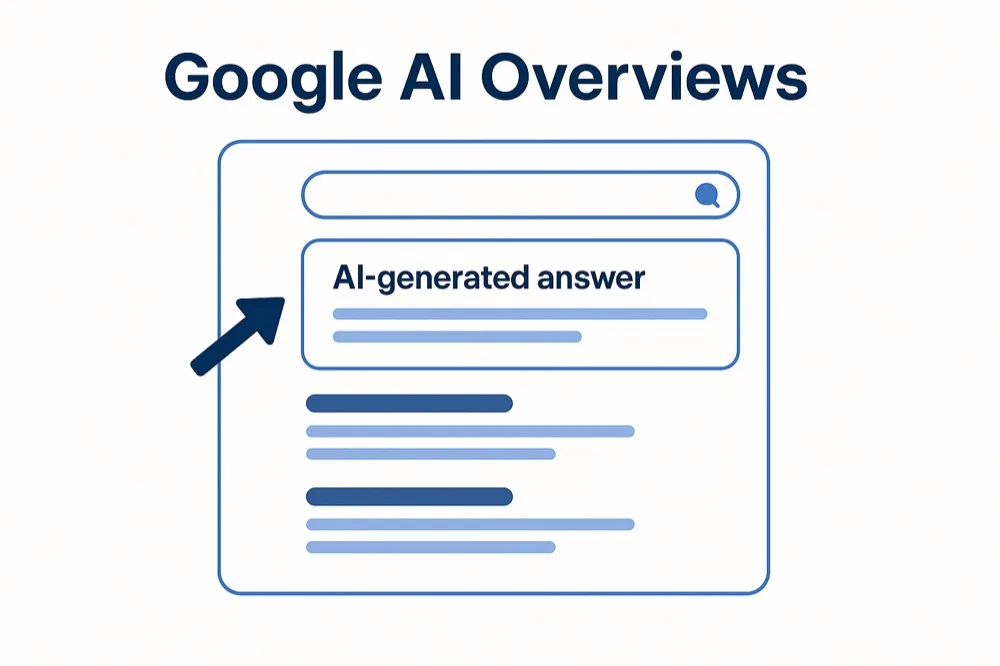
Google's AI system generates the Overview from content it already indexes and trusts. If your content is structured correctly and your brand has sufficient authority signals, Google's system will pull from it when generating AI Overviews for relevant queries.
This is different from ranking. You can rank on page one and still not be cited in the AI Overview above your listing.
Getting into Google AI Overviews requires three things:
- Structured content that AI systems can extract and summarize accurately
- Authority signals that tell Google your content is trustworthy
- Query alignment so your content matches the queries that trigger AI Overviews in your category
Step 1: Structure Content for AI Extraction
The single biggest reason B2B SaaS content gets ignored by AI Overviews is structural.
AI systems don't read your blog post the way a human does. They scan for extractable content. Short, direct answers that respond to specific questions. Clear topic-to-answer structure. Consistent entity signals throughout.
Apply these structural rules to every piece of content:
Lead with the answer. Start every section with a direct statement of the key point. Add context and supporting detail after. Don't build to the answer. State it first.
Use short paragraphs. Maximum 2-3 sentences per paragraph. One idea per paragraph. AI systems extract at the paragraph level. Long, dense blocks reduce your citation probability significantly.
Use question-phrased headers. H2s and H3s that mirror the actual query ("How do I get my SaaS cited in Google AI Overviews?") give AI systems explicit signals about what each section answers.
Include FAQ sections. A dedicated FAQ section at the end of each post, with proper HTML structure and FAQ schema markup, is among the most cited content formats in AI Overviews.
Step 2: Build the Authority Foundation
Google AI Overviews pull from sources Google considers authoritative. Authority has specific meaning here.
For B2B SaaS, the authority signals that matter most are:
E-E-A-T signals. Google's own quality framework: Experience, Expertise, Authoritativeness, Trustworthiness. Every piece of content should have a clear author, with a bio that establishes their credibility. Every factual claim should cite a source. Every important page should include schema markup.
Topical authority. Google's system favors sources that cover a topic comprehensively, not just occasionally. If you publish one post about AI citations and nothing else, you won't be treated as an authority on AI citations. Build clusters of related content covering your topic from multiple angles.
Off-site authority. Mentions from trusted third-party sources signal to Google that other authoritative sites consider your brand worth referencing. Reviews, comparison articles, guest posts, and industry directory listings all contribute.
Step 3: Align to AI Overview Query Types
Not every search query triggers a Google AI Overview. Knowing which ones do - and optimizing specifically for them - is the fastest way to build AI Overview presence.
AI Overviews appear most frequently on:
- How-to queries ("how to set up [X] for [use case]")
- What-is queries ("what is [technical concept or category]")
- Comparison queries ("[X] vs [Y] for [specific situation]")
- Best-of queries ("best [tool category] for [team type or company size]")
For B2B SaaS, this means your highest-leverage content types are deep how-to guides, genuine comparison pieces, and use-case specific best-of posts.
The key word is specific. "Best CRM software" is dominated by high-authority comparison sites. "Best CRM for 10-person SaaS sales teams" is a use-case specific query where mid-market SaaS brands can realistically earn AI Overview citations.
Go specific. Target the queries your exact buyer is running, not the category-level queries that massive SEO sites already own.
The Competitive Window Is Still Open
Most B2B SaaS companies haven't started implementing GEO strategies. The brands moving now are building a compounding advantage in AI visibility.
That window won't stay open indefinitely. As more companies adapt their content, the AI Overview landscape will get more competitive. The time to build AI visibility is before your competitors do, not after you've watched them take those citations.
CiteEngine offers a free AI Visibility Audit that shows you exactly where your brand appears in Google AI Overviews today, which queries your competitors are dominating, and which content changes to prioritize first.
Start your free AI Visibility Audit at www.citeengine.com.
Frequently Asked Questions
How do Google AI Overviews affect B2B SaaS organic traffic?
Google AI Overviews have reduced organic click-through rates by up to 47% on queries where they appear, according to DemandSage data. For B2B SaaS companies, this means traffic from traditional organic rankings is declining on informational and research queries. The brands recovering this traffic are the ones getting cited inside AI Overviews rather than just ranked below them.
Can I pay Google to appear in AI Overviews?
No. Google AI Overviews are organic. Google's AI system generates them from content it already indexes and trusts. You can't pay for placement. You can, however, structure your content and build the authority signals that make your content more likely to be extracted and cited. This is what GEO (Generative Engine Optimization) addresses.
What content format works best for getting cited in Google AI Overviews?
FAQ sections with proper HTML structure and FAQ schema markup are among the most frequently cited formats in Google AI Overviews. Beyond that, content that leads with direct answers, uses question-phrased H2 and H3 headers, and keeps paragraphs to 2-3 sentences performs significantly better than long-form content that buries the key point. How-to guides and specific comparison pieces also perform well for B2B SaaS categories.
What query types trigger Google AI Overviews for B2B SaaS?
Google AI Overviews appear most often on how-to queries, what-is queries, comparison queries, and best-of queries. For B2B SaaS, use-case specific versions of these queries are your highest opportunity. "Best CRM for small SaaS teams" triggers an AI Overview more consistently than "best CRM software," and it's a query where you can realistically compete against large comparison sites.
How long does it take to start appearing in Google AI Overviews?
Most B2B SaaS companies implementing a structured GEO approach start seeing their first AI Overview citations within 6-10 weeks. The timeline depends on your existing authority signals and how much content you publish. Starting with FAQ schema markup, structural content changes, and targeting specific use-case queries gives you the fastest path to first citations.
Published by CiteEngine. We help B2B SaaS companies get cited in Google AI Overviews and other AI search platforms. Start with a free AI Visibility Audit at www.citeengine.com.
Want AI to recommend your brand?
Get a free AI visibility audit: where you show up in ChatGPT, Claude and Perplexity today, and where your competitors do. No calls required.