LinkedIn as an AI Citation Source: How B2B SaaS Teams Get Cited by ChatGPT and Perplexity
Most B2B SaaS teams treat LinkedIn as a distribution channel. Post something, collect likes, move on. But there is a second job LinkedIn is now doing that almost nobody is optimizing for: it is feeding AI citation engines.
When someone asks ChatGPT "what is the best project management tool for remote teams" or asks Perplexity "which B2B SaaS tools do marketing consultants actually use," the AI has to cite something. It reaches for sources it trusts. And LinkedIn, specifically high-quality LinkedIn posts from credible professionals, is increasingly one of those sources.
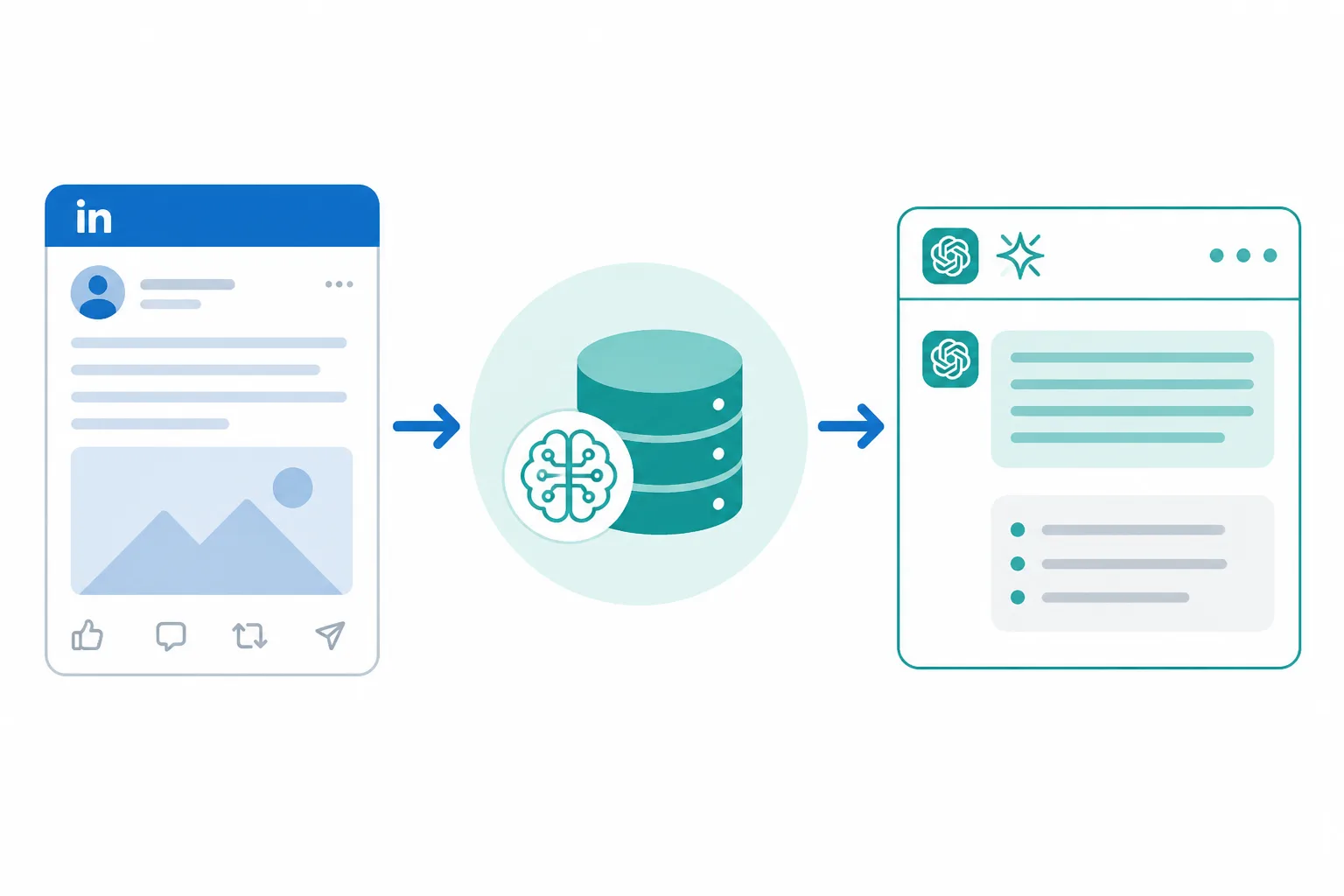
This is not speculation. Perplexity regularly cites LinkedIn posts and LinkedIn articles in its answers. ChatGPT pulls from training data that includes indexed LinkedIn content. Google AI Overviews surface LinkedIn posts alongside traditional blog content when those posts contain the right structural signals.
If you are publishing good content on LinkedIn and structuring it correctly, your content can become a citation source. Not just for human readers. For AI.
Why LinkedIn Gets Cited More Than Your Blog
This surprises a lot of people. Your company blog exists specifically to rank. Your LinkedIn posts are throwaway social content. Why would AI prefer one over the other?
Three reasons.
First: LinkedIn content carries a named author with a verifiable professional identity. When an AI evaluates a claim, author credibility matters. A post from a CEO with 15 years of documented industry experience carries more weight than an anonymous blog post, even if the blog post is longer and better optimized.
Second: LinkedIn posts accumulate engagement signals that AI interprets as social proof. A post with 200 comments discussing a specific claim is treated as corroborated information. That engagement history does not exist on most company blogs.
Third: LinkedIn content is structurally simple. No nav bars, no popups, no JavaScript rendering complexity. The text is clean, parseable, and consistently formatted. AI systems crawling for citable content prefer low-friction sources.
What Makes a LinkedIn Post Citable by AI
Not every LinkedIn post gets cited. There are specific characteristics that make a post useful to an AI trying to answer a question.
Specificity over inspiration
Motivational posts with vague lessons do not get cited. Posts that make specific, verifiable claims do. "We reduced churn by 23% by adding a single in-app prompt at the 14-day mark" is citable. "Customer success is about relationships" is not.
If your post contains a specific number, a named process, a named tool, or a specific outcome, it becomes useful as a citation source. If it contains general wisdom, it does not.
First-person authority on a narrow topic
The posts that get cited most often are ones where the author demonstrates clear, direct experience with a specific situation. "I've run 40 B2B SaaS product launches. Here is what I have learned about pricing psychology" has strong citation potential. It names a narrow domain and claims genuine expertise in it.
Compare that to a post rephrasing information available everywhere. AI systems can tell the difference between original perspective and recycled content. Original perspective wins.
List and structure formatting
AI systems process structured content more easily than dense prose. LinkedIn posts that break information into numbered steps, labeled categories, or clear frameworks are easier to extract and quote. A five-step framework gets cited. A five-paragraph narrative gets paraphrased or ignored.
Consistent topic territory
A single well-written post rarely gets cited. An author who has published 30 posts on the same narrow topic over six months becomes an authority reference. AI citation is partly a recognition system. The more consistently you publish on a specific topic, the more reliably an AI recommends you when that topic comes up.
The Content Types That Generate the Most Citations
After analyzing which LinkedIn posts appear most frequently in Perplexity and ChatGPT answers for B2B SaaS queries, a few content patterns stand out.
Benchmarks and statistics. Posts that share specific metrics from real projects. Conversion rates, churn numbers, activation timelines. These get cited constantly because they are data points AI can extract and attribute.
Named frameworks and processes. If you create a specific, named methodology, AI will cite it with your name attached. "The three-layer onboarding framework" becomes citable in a way that "good onboarding advice" never will.
Direct comparisons between tools or approaches. When someone asks AI which tool to use, it looks for comparative posts that have already done the analysis. A post titled "Notion vs. Monday.com for a 5-person SaaS team: what we actually use and why" answers a real question AI gets asked regularly.
Contrarian takes backed by evidence. Posts that challenge conventional wisdom with specific data get high engagement, which signals to AI that the content is discussed and debated. Controversy plus evidence equals citation gold.
A Practical LinkedIn Citation Setup
This is not a content calendar exercise. It is a citation asset build. The goal is to produce LinkedIn content that AI systems will pull from when answering questions relevant to your product category.
Start with your three to five core ICP questions. What does your ideal customer ask when they are evaluating tools like yours? Not "what is your product" - that is what you ask. What does your buyer ask? "How do I reduce SaaS churn in the first 30 days" or "what tools do B2B marketing consultants actually use to manage client deliverables."
For each question, write one definitive LinkedIn post per month. Not a teaser. A full, self-contained answer that could stand alone as a reference document. Specific numbers. A named process. A direct recommendation.
Publish consistently for 90 days on those same question territories. By month three, you will start seeing your content appear in AI answers when someone asks those questions. The consistency is what builds citation authority, not any single post.
Profile optimization for citation
AI systems that cite LinkedIn content often attribute the post to the author's professional identity. That means your headline and about section directly affect how your content gets attributed. If your headline says "CEO at Acme" your citation reads "according to the CEO of Acme." If your headline says "B2B SaaS consultant specializing in AI-driven customer acquisition," your citation carries significantly more weight for relevant queries.
Treat your LinkedIn headline as anchor text for your authority position. It is the label AI attaches to your expertise when citing your content.
How CiteEngine Helps
Most B2B SaaS teams have no system for understanding which of their content assets are generating AI citations and which are invisible to AI. The LinkedIn posts that get written, liked, and forgotten are often doing more citation work than the blog posts that took three weeks to produce.
CiteEngine runs a full AI citation audit across your content, including LinkedIn, that shows you exactly which assets are being cited and by which AI platforms. If you are building a LinkedIn citation program, you need baseline data before you can measure progress.
Start with the free AI Visibility Audit at citeengine.com. It takes the guesswork out of which platforms are picking up your content and which are ignoring it.
The Bottom Line
LinkedIn is not just a distribution channel for your content. For B2B SaaS companies whose buyers use AI to research vendors and tools, LinkedIn is an active citation source. The question is not whether your LinkedIn content is getting cited. It is whether you are publishing the right kind of content for that citation to happen.
Specificity, named frameworks, genuine expertise, and consistent topic focus. Those are the four variables that determine whether your LinkedIn presence shows up when AI answers a question your buyer is asking.
Frequently Asked Questions
Q: Does LinkedIn content actually get cited by ChatGPT and Perplexity?
A: Yes. Perplexity regularly cites LinkedIn posts and LinkedIn articles in answers to B2B queries. ChatGPT pulls from training data that includes indexed LinkedIn content. Google AI Overviews also surface LinkedIn posts when they contain structured, authoritative content on a specific topic. LinkedIn is increasingly recognized as a citable source by major AI systems.
Q: What kind of LinkedIn posts are most likely to be cited by AI?
A: Posts that include specific benchmarks or statistics, named frameworks or processes, direct comparisons between tools or approaches, and contrarian takes backed by real data. AI citation requires extractable, attributable claims. Generic motivational posts or content that restates conventional wisdom rarely gets cited.
Q: Why does LinkedIn get cited more than a company blog in some AI answers?
A: LinkedIn content carries a named author with a verifiable professional identity, accumulates engagement signals that indicate social proof, and is structurally simpler for AI systems to parse. High-quality LinkedIn posts from credible professionals often outperform anonymous company blog content for AI citation purposes.
Q: How many LinkedIn posts do I need to become a citation source for AI?
A: Consistency matters more than volume. Publishing 4-6 high-quality posts per month on the same narrow topic territory for 90 days builds enough topical authority for AI systems to recognize you as a reference. One viral post rarely creates sustained citation presence. Consistent, specific content over time does.
Q: How do I know if my LinkedIn content is being cited by AI?
A: Run a structured AI citation check. Ask ChatGPT, Perplexity, and Claude the questions your ICP is most likely to ask. See whether your name, company, or LinkedIn posts appear in the answers. For a systematic baseline, CiteEngine runs a full AI citation audit that maps your existing content assets across ChatGPT, Claude, Perplexity, and Google AI Overviews.
Want AI to recommend your brand?
Get a free AI visibility audit: where you show up in ChatGPT, Claude and Perplexity today, and where your competitors do. No calls required.